What is GDSN? Why do we need it? What's the point?
Imagine a world where everyone measured time or distance differently. Then imagine trying to move products around the world with lots of different time and distance systems in play. If some people used a 13 ½-hour day instead of a 24-hour day, things would get complicated quickly.
GDSN, the Global Data Synchronization Network, gives us a world where everyone speaks a common language: a barcode denotes the same product, whether it's scanned in Chicago or in Perth, Australia. In foodservice, it gives everyone in the value chain a way to communicate with one another and to track products. It lets manufacturers talk to redistributors and distributors, who can then talk to operators, with everyone speaking the same language.
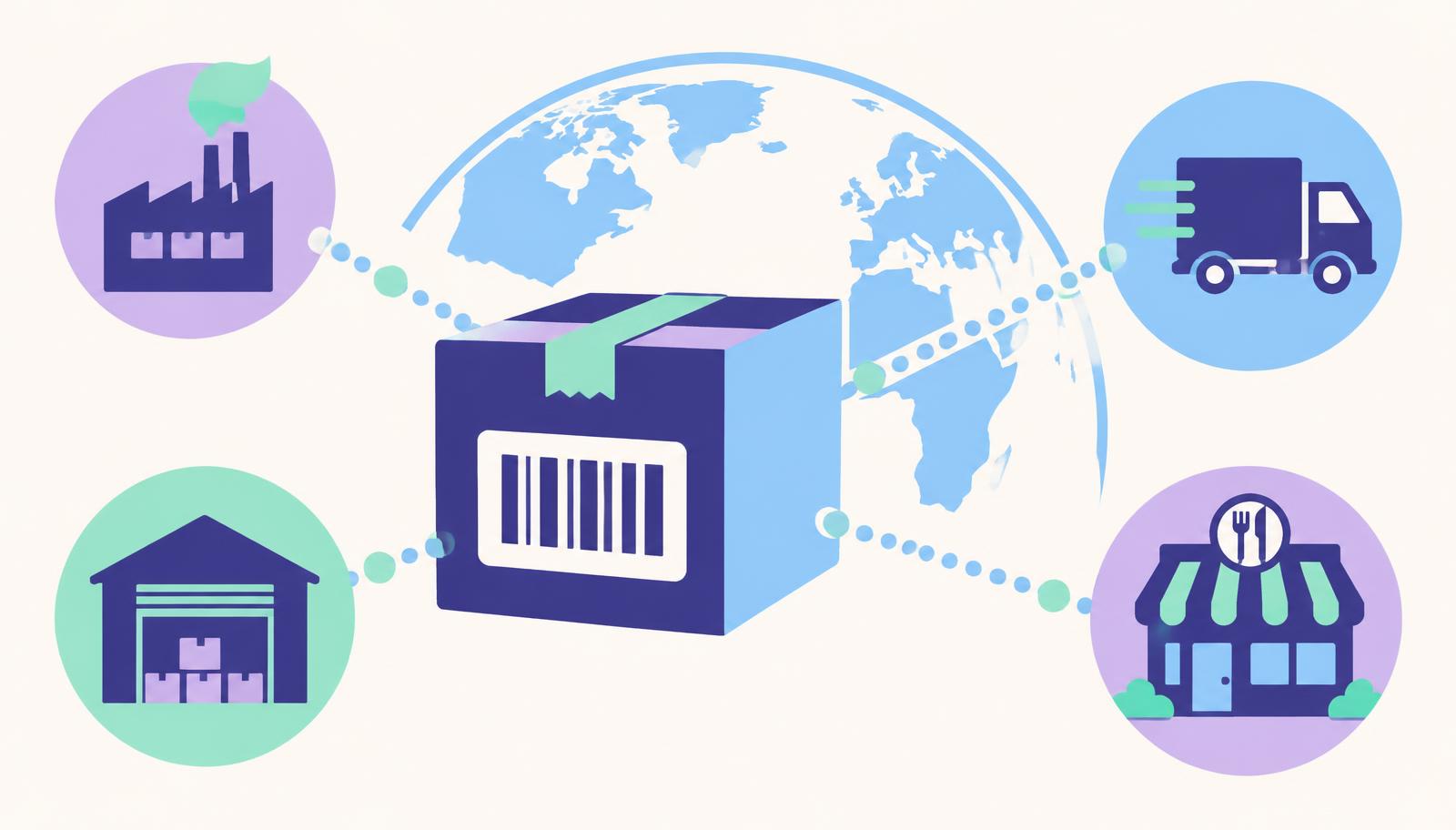
Your product's GDSN information describes it to everyone who handles it, from the time it leaves your facility until it's cracked open and used in an operator's recipe. Logistics needs accurate measurements and weight, to pack your product on a truck and get it from one place to another. Distributor sales representatives need specifics and so much more, to be able to sell your products. And operators need that same information to differentiate your product from the competition and choose it.
How do distributors and redistributors use the information in GDSN?
Correct information in your GDSN lets distributors and redistributors make sure operators receive the products they want, leading to happier operators and more repeat sales. Better information also means fewer returns of your product, less frustration for operators, and more efficient use of time and resources for everyone.
GS1 has found that inaccurate data increases labor costs across the supply chain by up to 25%. For companies moving your product to warehouses and to operators, a ¼" inaccuracy in measurements can mean 20 fewer cases per pallet, 1,000 fewer cases per truckload, and 6 more trucks on the road. Don't be that guy, for redistributors like Dot, distributors, and operators.
The more effectively you communicate with your partners, the more easily your products can sell. It's as simple as that. Putting accurate data into GDSN and using the standards established by GS1, so that you're speaking the same language as all of your trade partners and your operator customers, means that your product can be ordered, packed and shipped seamlessly. That efficiency increases revenues and profit margins for everyone.
Because you're all on the same team, with the same goal of selling and delivering as much product as possible.
How does your sales team use the information on GDSN?
Your own goal is a little more specific than Dot's or than your distributor's goal. You want to sell and deliver as much of your product as possible, not just any product. Making sure your product moves smoothly and efficiently through distribution contributes to that, but the rubber only meets the road when operators choose your product.
Everyone in your sales force will use your GDSN information: your direct sales teams, brokers, and distributors' sales reps. Providing them with complete, accurate information, not only on your website, sell sheets and promotional materials, but in your GDSN information, ensures your sales team feels confident about your product.
Dot points again to the GS1 statistics: 86% of consumers (and operators are your consumers) said they're unlikely to buy products from a brand after an experience with inaccurate product information. Sales incentives aside, salespeople do what commissions and human nature dictate: they sell what they can sell most of, what they have the most confidence in, and what's easiest to sell. Sales reps want to show operators the products that feel more interactive and accessible, the ones that have lots of pictures, videos and a full set of detailed information.
Accurate information, consistent across website, sell sheet and GDSN, can help reduce friction and make your product the one that comes to a salesperson's mind first and that comes out of her sample bag most frequently.
Getting your information right and doing it once with Dot allows for an efficient, one-source portal to distributors and to the world.
How do operators use GDSN information?
Whether through distributors' websites or the Dot Expressway, operators use GDSN data to choose the products they want to sample. Sometimes they want to add a product: a limited time offer of onion rings alongside the French fries they always serve. About half the time, they want to replace a product: the current brand of French fries isn't working, and they need to make a change.
Many of these decisions get made at odd, quiet hours of the day or night, while the restaurant is closed, and operators can research, compare and shop online. They're made while your sales force sleeps.
Ideally, you want your GDSN listing to reflect your product with as much detail as possible, as if it were a sell sheet or a listing on an online store. Because, guess what, that's what it is. Operators use GDSN to know which products to ask their distributors about, and which samples to request. It's the pull advertising you can do for your product in the middle of the night, during a blizzard, or while your sales team visits other operators.
Dot Expressway research showed that products with one image sold 11% faster than products without images, and products with three or more images had the highest sales rates. These statistics were so consistent that Dot now requires a minimum of five product images, because images help your products sell.
Operators looking for new products want all the information they can get. Which pizza dough asks to be sampled, one with just its weight, or one that includes not only weight but the sizes of pie it will make? Which dough will feel more inviting and engaging, one with the bare minimum of information, or yours that includes videos, recipe inspirations and a full sell sheet of specs, and details?
Those who need to replace a product may need even more information. Does the new product come in the size I need? Does it look like something I want to serve in my restaurant? Does it have the ingredients I want and/or not have the ingredients I don't want? Will it work with my current equipment? Does it have the same nutritionals as my current product, or will I have to change all my menu information to accommodate it? How does it cook? Is there recipe inspiration to go with it?
GDSN gives you a way to be passively discoverable and attractive, leading operators to your website for more information or to ask their distributor about you, rather than clicking through to the next search result.
GDSN accuracy: details that lead to success
GDSN can seem like a small detail, can be relegated to low-priority status. Have you been just getting by with your GDSN data entry, doing the minimum to make sure you aren't audited out of Dot, or are you making the most of it? Are you ensuring that your listings reflect your products in their best light, as a single source of information?
Whose responsibility have you made it? Are you leaving it up to the R&D department? Are they as good as your sales and marketing team at talking about your product in a way that makes operators want to buy it and serve it to their patrons? Can they name its features and benefits?
Once you have product information in Dot, updates (when you change packaging, when your certifications renew) takes time and effort. Tending to those details, though, can make the difference. It can help determine whether salespeople and operators choose your product, or swipe left to move on to a competitor.
Creating and uploading video adds an additional layer of complication and effort, but also adds an additional sales tool for increasing engagement with your product and its listing. The investment of time and resources pays.
Dot's advice? Hire a resource. Dedicating a team member to data accuracy may not make sense for your new brand right away, but ESA can provide you with the expertise to audit, create, correct and maintain your GDSN data, so that you're always showing up strong and maximizing every opportunity.