"Cases don't pay the bills. Dollars do." It's a lesson from a former CEO that has stayed with me throughout my career. It is a simple reminder about the value that each case sold creates, and how that value translates to the bottom line. From a CFO's perspective, I would add an important clarifier: revenue is not the same as demand.
Too often, reported growth is accepted at face value because product shipped, invoices were issued, and revenue was recognized. Yet shipment is an event. Demand is a behavior. The distinction is especially important in foodservice, where multiple layers sit between the manufacturer and the operator ultimately using the product.
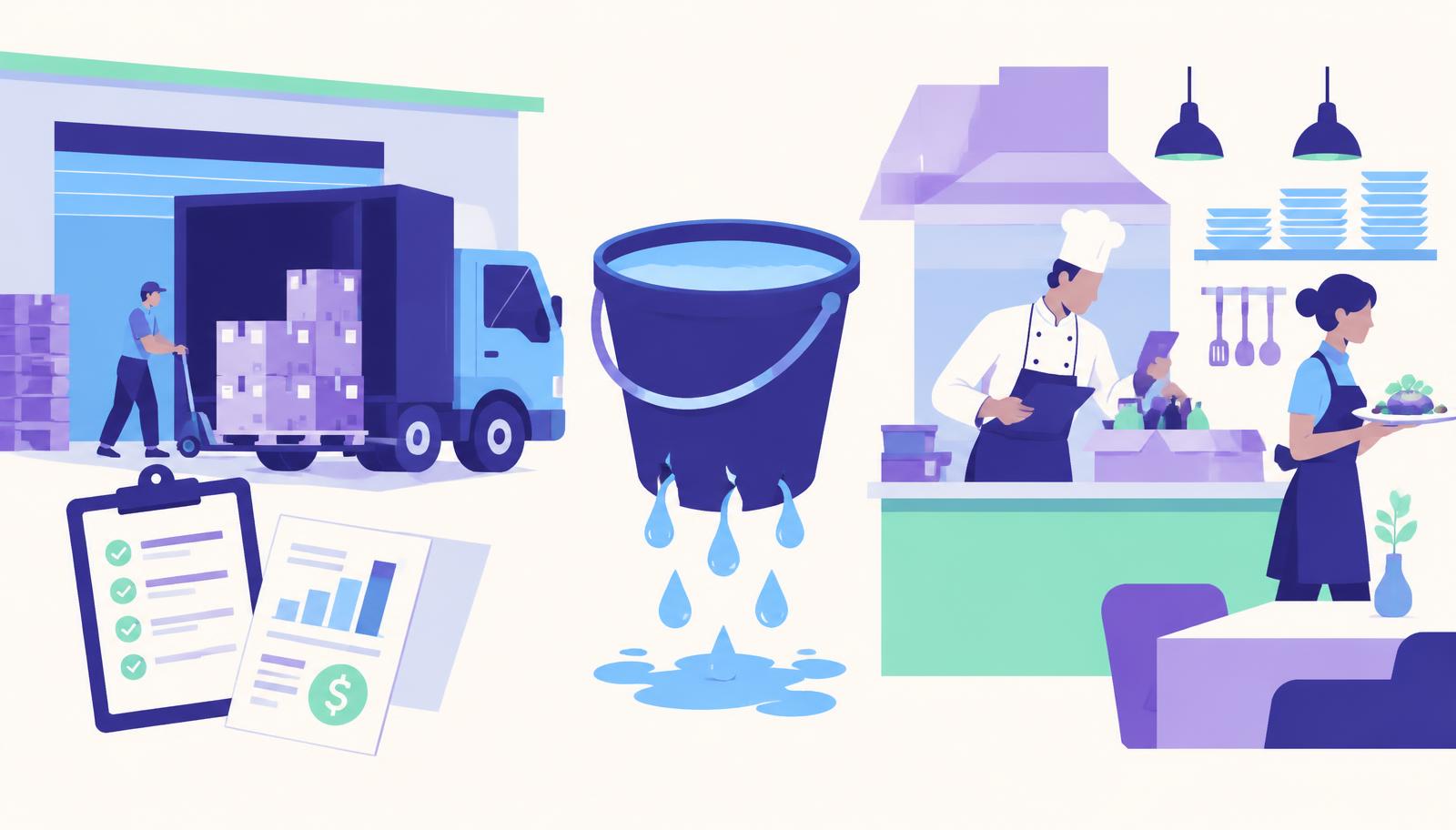
I cannot count the number of times I've seen manufacturers celebrate landing a new distributor or shipping a major first order. Revenue appears immediately, milestones are achieved, and everyone assumes demand has been validated. Then, months later, they discover the product never generated meaningful operator pull-through. Inventory slowly works its way through the distributor network, code-dated product returns, reorder rates disappoint, and eventually the distributor reallocates shelf space or exits the relationship altogether. What looked like growth was really a temporary inventory event.
This is where revenue quality and the "leaky bucket" concept intersect. New customer wins matter, but if demand is not strong enough to generate replenishment orders, every new account simply replaces volume that is quietly disappearing elsewhere. A business can appear healthy and growing while its underlying demand remains flat, or even declines. In foodservice, the supply chain complexity often masks this reality because the demand signal can lag shipments by months.
For CFOs, lenders, and investment committees, understanding demand should be at the center of revenue diligence. The critical question is not, "Did it ship?" It is, "What happened after it shipped?" Distribution creates access, not adoption. Enterprise value is built on repeatable consumption, not initial placements. The strongest forecasts are grounded not in shipments alone, but in evidence that operators continue to buy, use, and reorder the product. Revenue may start the story, but demand determines how it ends.